Quarter 2 (2025-26)
| Site: | Learn@VCS |
| Course: | PLTW: Principles of Engineering (H) - Mr. Crandall |
| Book: | Quarter 2 (2025-26) |
| Printed by: | Guest user |
| Date: | Tuesday, 12 May 2026, 7:39 PM |
October 13/14
Unit 3: Control Systems
Classroom Activities
- Devotional/Prayer
- Test today on Unit 3.2 Fluid Power
Homework
- Keep Engineering notebook up to date
October 15/16
Unit 3: Control Systems
Classroom Activities
- Devotional/Prayer
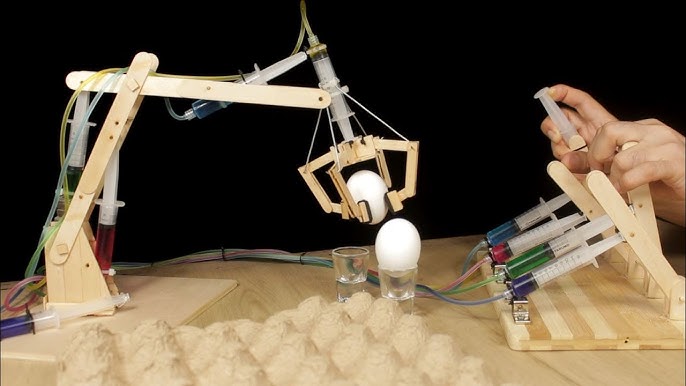
- Finish Hydraulics Project (Day 6). Presentation on Tuesday, 10/21. Presentation boards available. Available after school Thursday and before school Thursday and Tuesday.
- 30% Design Process
- Engineering notebook
- Sketch proposals (minimum of four)
- Decision Matrix
- Design (electronic drawing) with annotations/notations
- IMA
- 10% Construction Quality
- 15% Number of Actuator Systems (1-70%, 2-85%, 3-100%)
- 10% Hydraulic Mechanic Efficiency
- 10% 3D Parts (1-70%, 2-85%, 3-100%)
- 10% Creativeness
- 5% Presentation to Judges
- 10% On Task/working together
- 30% Design Process
Homework
- Keep Engineering notebook up to date
October 21/22
Unit 3: Control Systems
Classroom Activities
- Devotional/Prayer
- Hydraulics Project (Day 6) postponed till Wednesday, 10/29. Presentation boards available. Available after school Thursday and before school Thursday and Tuesday.
- 30% Design Process
- Engineering notebook
- Sketch proposals (minimum of four)
- Decision Matrix
- Design (electronic drawing) with annotations/notations
- IMA
- 10% Construction Quality
- 15% Number of Actuator Systems (1-70%, 2-85%, 3-100%)
- 10% Hydraulic Mechanic Efficiency
- 10% 3D Parts (1-70%, 2-85%, 3-100%)
- 10% Creativeness
- 5% Presentation to Judges
- 10% On Task/working together
- 30% Design Process
Homework
- Keep Engineering notebook up to date
October 23/24
Unit 3: Control Systems
Classroom Activities
- Devotional/Prayer
- Activity 4.1.3 Free Body Diagrams
- Due beginning of class 10/29
- Project demonstration Monday, 10/27
- Survey
Homework
- Keep Engineering notebook up to date
October 27/28
Unit 3: Control Systems
Classroom Activities
- Devotional/Prayer
- Continue Activity 4.1.3 Free Body Diagrams
- Due beginning of class 10/31
- Project demonstration Monday, 10/29
Homework
- Keep Engineering notebook up to date
October 29/30
Unit 3: Control Systems
Classroom Activities
- Devotional/Prayer
- Project demonstration
- Survey
Homework
- Keep Engineering notebook up to date
Oct 31/Nov 3
Unit 4.1: Statics
In Lesson 4.1, students explore various aspects of static structures and apply mathematical approaches to solve structural problems. They begin the lesson by applying an engineering design process to design and test a cantilever beam. Students then compare materials and their properties that impact beam deflection; they also use 3-D modeling software to analyze and investigate factors that impact beam deflection and solve an engineering design problem. Students analyze and solve systems through the use of free body diagrams, force vectors, moment calculations, and method of joints. They will also explore internal forces in materials and the relationship between stress and strain. Students culminate their understanding to design their own bridge truss to support a given load at the lowest cost.
Classroom Activities
- Devotional/Prayer
- Complete Activity 4.1.3 Free Body Diagrams
Homework
- Keep Engineering notebook up to date
November 4/5
Unit 4.1: Statics
In Lesson 4.1, students explore various aspects of static structures and apply mathematical approaches to solve structural problems. They begin the lesson by applying an engineering design process to design and test a cantilever beam. Students then compare materials and their properties that impact beam deflection; they also use 3-D modeling software to analyze and investigate factors that impact beam deflection and solve an engineering design problem. Students analyze and solve systems through the use of free body diagrams, force vectors, moment calculations, and method of joints. They will also explore internal forces in materials and the relationship between stress and strain. Students culminate their understanding to design their own bridge truss to support a given load at the lowest cost.
Classroom Activities
- Devotional/Prayer
- Complete Activity 4.1.4 Calculating Force Vectors
Homework
- Keep Engineering notebook up to date
November 6/7
Unit 4.1: Statics
In Lesson 4.1, students explore various aspects of static structures and apply mathematical approaches to solve structural problems. They begin the lesson by applying an engineering design process to design and test a cantilever beam. Students then compare materials and their properties that impact beam deflection; they also use 3-D modeling software to analyze and investigate factors that impact beam deflection and solve an engineering design problem. Students analyze and solve systems through the use of free body diagrams, force vectors, moment calculations, and method of joints. They will also explore internal forces in materials and the relationship between stress and strain. Students culminate their understanding to design their own bridge truss to support a given load at the lowest cost.
Classroom Activities
- Devotional/Prayer
- Complete Activity 4.1.5 Calculating Moments
Homework
- Keep Engineering notebook up to date]
November 10/12
Unit 4.1: Statics
In Lesson 4.1, students explore various aspects of static structures and apply mathematical approaches to
solve structural problems. They begin the lesson by applying an engineering design process to design and
test a cantilever beam. Students then compare materials and their properties that impact beam deflection;
they also use 3-D modeling software to analyze and investigate factors that impact beam deflection and solve
an engineering design problem. Students analyze and solve systems through the use of free body diagrams,
force vectors, moment calculations, and method of joints. They will also explore internal forces in materials and
the relationship between stress and strain. Students culminate their understanding to design their own bridge
truss to support a given load at the lowest cost.
Classroom Activities
- Devotional/Prayer
- Discuss Activity 4.1.7A Calculating Force Vectors
- Continue Bridge Project
Homework
- Keep Engineering notebook up to date
- Complete Activity 4.1.7A Calculating Force Vectors
November 13/14
Unit 4.1: Statics
In Lesson 4.1, students explore various aspects of static structures and apply mathematical approaches to solve structural problems. They begin the lesson by applying an engineering design process to design and test a cantilever beam. Students then compare materials and their properties that impact beam deflection; they also use 3-D modeling software to analyze and investigate factors that impact beam deflection and solve an engineering design problem. Students analyze and solve systems through the use of free body diagrams, force vectors, moment calculations, and method of joints. They will also explore internal forces in materials and the relationship between stress and strain. Students culminate their understanding to design their own bridge truss to support a given load at the lowest cost.
Classroom Activities
- Devotional/Prayer
- Discuss Activity 4.1.7 Step-by-Step Truss Analysis Worksheet
- Continue Bridge Project
Homework
- Keep Engineering notebook up to date
- Complete Activity 4.1.7 Step-by-Step Truss Analysis Worksheet
November 17/18
Unit 4.1: Statics
In Lesson 4.1, students explore various aspects of static structures and apply mathematical approaches to solve structural problems. They begin the lesson by applying an engineering design process to design and test a cantilever beam. Students then compare materials and their properties that impact beam deflection; they also use 3-D modeling software to analyze and investigate factors that impact beam deflection and solve an engineering design problem. Students analyze and solve systems through the use of free body diagrams, force vectors, moment calculations, and method of joints. They will also explore internal forces in materials and the relationship between stress and strain. Students culminate their understanding to design their own bridge truss to support a given load at the lowest cost.
Classroom Activities
- Devotional/Prayer
- Turn in Activity 4.1.7 Step-by-Step Truss Analysis Worksheet
- Continue Bridge Project
Homework
- Keep Engineering notebook up to date
November 19/20
Unit 4.1: Statics
In Lesson 4.1, students explore various aspects of static structures and apply mathematical approaches to solve structural problems. They begin the lesson by applying an engineering design process to design and test a cantilever beam. Students then compare materials and their properties that impact beam deflection; they also use 3-D modeling software to analyze and investigate factors that impact beam deflection and solve an engineering design problem. Students analyze and solve systems through the use of free body diagrams, force vectors, moment calculations, and method of joints. They will also explore internal forces in materials and the relationship between stress and strain. Students culminate their understanding to design their own bridge truss to support a given load at the lowest cost.
Classroom Activities
- Devotional/Prayer
- Continue Bridge Project
Homework
- Keep Engineering notebook up to date
November 21 ("A" Day)
Unit 4.1: Statics
In Lesson 4.1, students explore various aspects of static structures and apply mathematical approaches to solve structural problems. They begin the lesson by applying an engineering design process to design and test a cantilever beam. Students then compare materials and their properties that impact beam deflection; they also use 3-D modeling software to analyze and investigate factors that impact beam deflection and solve an engineering design problem. Students analyze and solve systems through the use of free body diagrams, force vectors, moment calculations, and method of joints. They will also explore internal forces in materials and the relationship between stress and strain. Students culminate their understanding to design their own bridge truss to support a given load at the lowest cost.
Classroom Activities
- Devotional/Prayer
- Continue Bridge Project
Homework
- Keep Engineering notebook up to date
November 25 ("A" DL Day)
Unit 4.1: Statics
In Lesson 4.1, students explore various aspects of static structures and apply mathematical approaches to solve structural problems. They begin the lesson by applying an engineering design process to design and test a cantilever beam. Students then compare materials and their properties that impact beam deflection; they also use 3-D modeling software to analyze and investigate factors that impact beam deflection and solve an engineering design problem. Students analyze and solve systems through the use of free body diagrams, force vectors, moment calculations, and method of joints. They will also explore internal forces in materials and the relationship between stress and strain. Students culminate their understanding to design their own bridge truss to support a given load at the lowest cost.
Classroom Activities
- Devotional/Prayer
- Activity 4.1.7 Step-By-Step Truss Analysis Worksheet Answer Key
- Test will be on 12/4
- Continue Bridge Project
- Should have an electronic documented bridge design in your engineering notebook. Should be to scale like 1/4":1".
- Make sure you document any changes you make.
- Show your prototyping.
- Expect it to be on the order of 10 plus pages.
- All team members should be sharing the info. No excuse to say it was in another team members engineering notebook.
- Testing of bridges will be on 12/8
Homework
- Keep Engineering notebook up to date
December 2/3
Unit 4.1: Statics
In Lesson 4.1, students explore various aspects of static structures and apply mathematical approaches to solve structural problems. They begin the lesson by applying an engineering design process to design and test a cantilever beam. Students then compare materials and their properties that impact beam deflection; they also use 3-D modeling software to analyze and investigate factors that impact beam deflection and solve an engineering design problem. Students analyze and solve systems through the use of free body diagrams, force vectors, moment calculations, and method of joints. They will also explore internal forces in materials and the relationship between stress and strain. Students culminate their understanding to design their own bridge truss to support a given load at the lowest cost.
Classroom Activities
- Devotional/Prayer
- Continue Bridge Project
- Judging 12/8
- Test 12/4
Homework
- Keep Engineering notebook up to date
December 4/5
Unit 4.1: Statics
In Lesson 4.1, students explore various aspects of static structures and apply mathematical approaches to solve structural problems. They begin the lesson by applying an engineering design process to design and test a cantilever beam. Students then compare materials and their properties that impact beam deflection; they also use 3-D modeling software to analyze and investigate factors that impact beam deflection and solve an engineering design problem. Students analyze and solve systems through the use of free body diagrams, force vectors, moment calculations, and method of joints. They will also explore internal forces in materials and the relationship between stress and strain. Students culminate their understanding to design their own bridge truss to support a given load at the lowest cost.
Classroom Activities
- Devotional/Prayer
- Test Today
- Bridge Project Judging 12/8
Homework
- Keep Engineering notebook up to date
December 8/9
Unit 4.1: Statics
In Lesson 4.1, students explore various aspects of static structures and apply mathematical approaches to solve structural problems. They begin the lesson by applying an engineering design process to design and test a cantilever beam. Students then compare materials and their properties that impact beam deflection; they also use 3-D modeling software to analyze and investigate factors that impact beam deflection and solve an engineering design problem. Students analyze and solve systems through the use of free body diagrams, force vectors, moment calculations, and method of joints. They will also explore internal forces in materials and the relationship between stress and strain. Students culminate their understanding to design their own bridge truss to support a given load at the lowest cost.
Classroom Activities
- Devotional/Prayer
- Bridge Project Judging today
Homework
- Keep Engineering notebook up to date